

A note to readers: this article was originally written for a publication which shall remain nameless, that ghosted me after accepting it. Believing they would ultimately get back to me (particularly as it was accepted on spec and they could have just turned it down!) I did not try to sell it elsewhere, and now do not have time to do so before the election. Besides proofing, it is in the form it was submitted almost two months ago, though the revision feedback- that they intended to do themselves- was admittedly fairly strong.
Since entering the House of Representatives at the beginning of 2023, Representative Marie Gluesenkamp Perez has made a splash. The moderate Democrat from Washington’s 3rd District- which leans Republican- has become known as an independent thinker who focuses on working class issues and is critical of silly regulations (though in other cases she has advocated regulating some of the most annoying things in society, such as excessively bright headlights.) The Congresswoman has developed a lot of fans for her “down home” interests as well enemies for not always being a reliable Democrat vote, such as her currently being in hot water with the Democrat House leadership for voting with the Republicans on a rule, on the grounds that it would help lobstermen. She was recently the subject of a favorable profile on the State of the Day Substack by Amber Duke, the Editor-in-Chief of the right wing news site The Daily Caller, which was subtitled, “Meet the Democrat trying to legislate for the common man.”
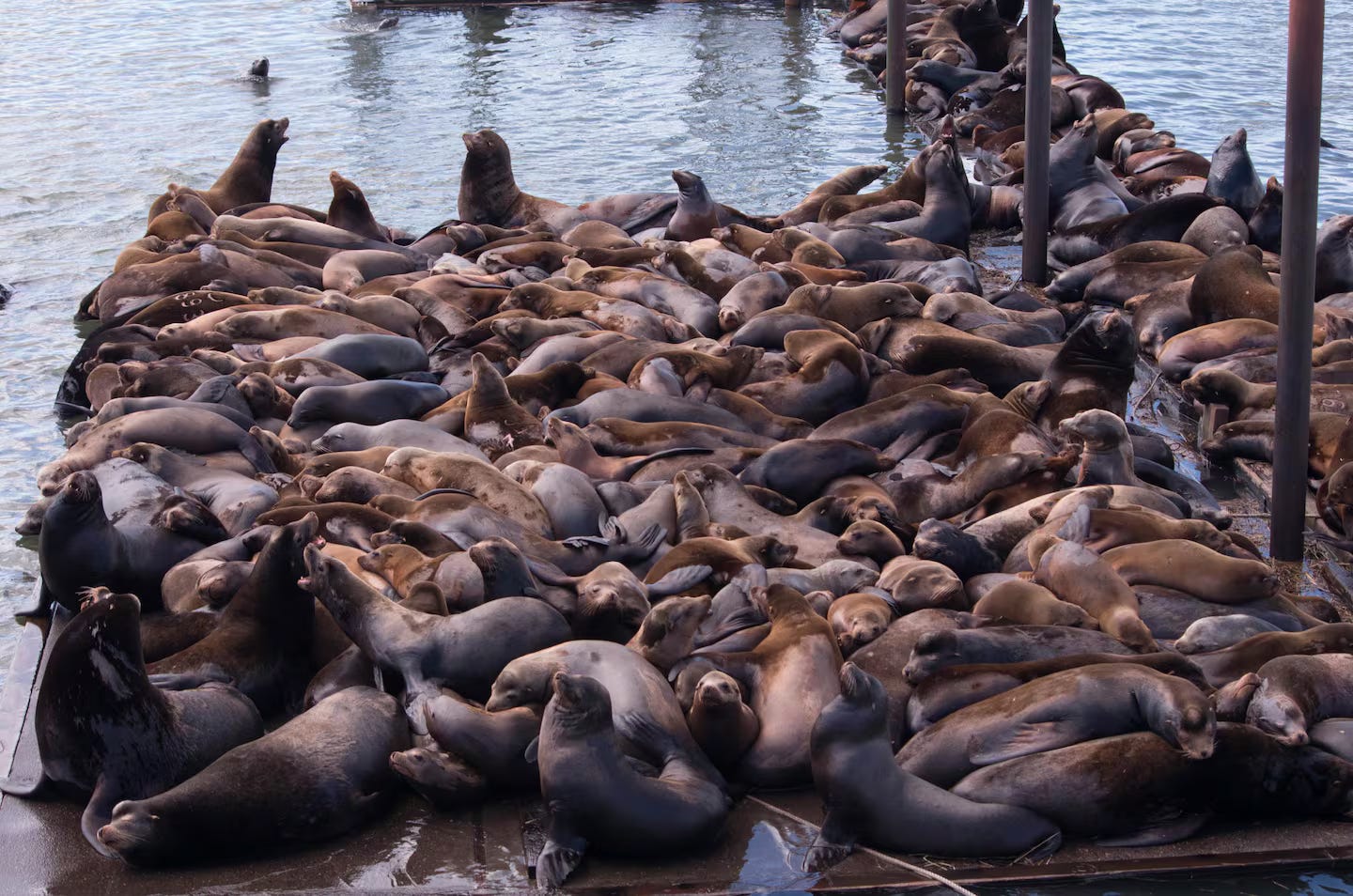
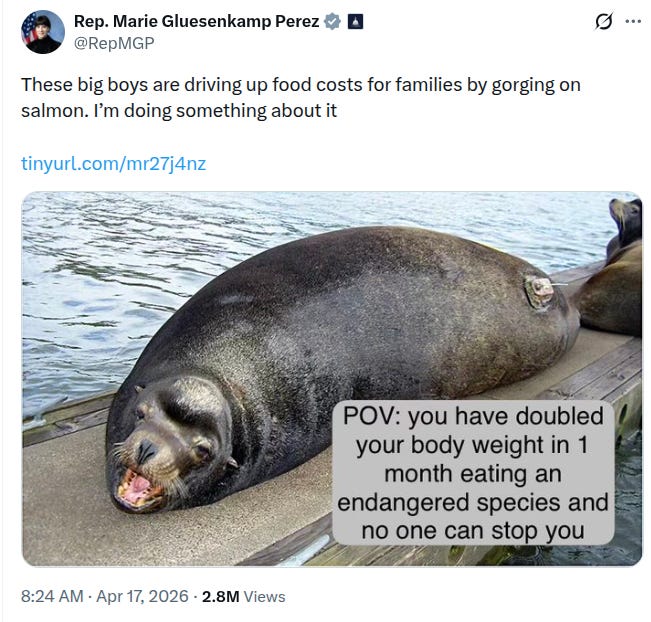
Along with all of this she has become the target of ridicule for her focus on the lethal removal of sea lions from the Columbia River, particularly after making a post on X in April that said, “These big boys are driving up food costs for families by gorging on salmon. I’m doing something about it,” and included an image of a sea lion that said “POV: you have doubled your body weight in 1 month by eating an endangered species and no one can stop you.” Critics treat Gluesenkamp Perez as if she has some sort of deranged Ahab-ian vendetta against nature for wanting to control sea lion populations, but to those in the Pacific Northwest, and anyone who fishes on the vast Columbia and Snake River system, it is well known that an overpopulation of sea lions present a threat to salmon- and other species which rely on salmon- though the significance of the problem remains contentious.
When I saw that Representative Gluesenkamp Perez was talking about this issue, my first thought was that while it may seem silly to outsiders, I’m sure this is something constituents in her district, which covers the mouth of the Columbia River, complain about all the time. Further, because sea lions are federally protected, their Representative is the person to whom they are supposed to cry out for relief from such oppression. I was also impressed when she came out with her Protecting Columbia River Salmon Act, which proposes the same policy I have supported for ten years: just let the tribes kill the sea lions instead of engaging in an egregiously expensive federal program to occasionally remove the most troublesome members of the species.
Ms. Gluesenkamp Perez was gracious enough to agree to an interview, and speaking to her I learned that this situation is even more tragicomical than I had realized and certainly does call for immediate action
Before continuing, readers will benefit from a background about human and animal life in the Northwest. If you don’t live here, it is probably hard to conceptualize just how significant salmon are to this part of the country. The Columbia and Snake River Dams system, the salmon runs, and how they interact, are the most significant federal political issue in the whole region. Federal legislators in the Northwest politically live or die on dams and salmon. Salmon and steelhead (which are basically just another kind of salmon, but it is for ichthyologists to argue if they should be classified separately) are counted as they make their run through the fish ladders, and their numbers are a common news item that impacts the salmon fishing seasons, which are subject intimidatingly complex and changing regulations. By my count, the small regional newspaper where I live in Eastern Washington, The Lewiston Morning Tribune, published 43 articles about salmon through August of this year, excluding the word’s use in place-names and debate about changes to the Endangered Species Act, and this is over 300 miles away from the ocean. In 2017, the city of Seattle completed a $330 million sea wall designed to improve habitat for young salmon. As of 2023, roughly half of the entire federal endangered species budget of $1.2 billion was going to help salmon and steelhead in the Northwest, and for all of that the runs have only rebounded from their low of around 1 million in the 1990s to around 2 million, well short of the goal of 5 million set by conservationists. Meanwhile, California sea lion populations bottomed out at around 8,000 in the 1950s and are now at over 300,000. The National Parks Service says the population is “reaching” carrying capacity, while the International Union for the Conservation of Nature lists California sea lions as “least concern,” the same status as white-tailed deer.
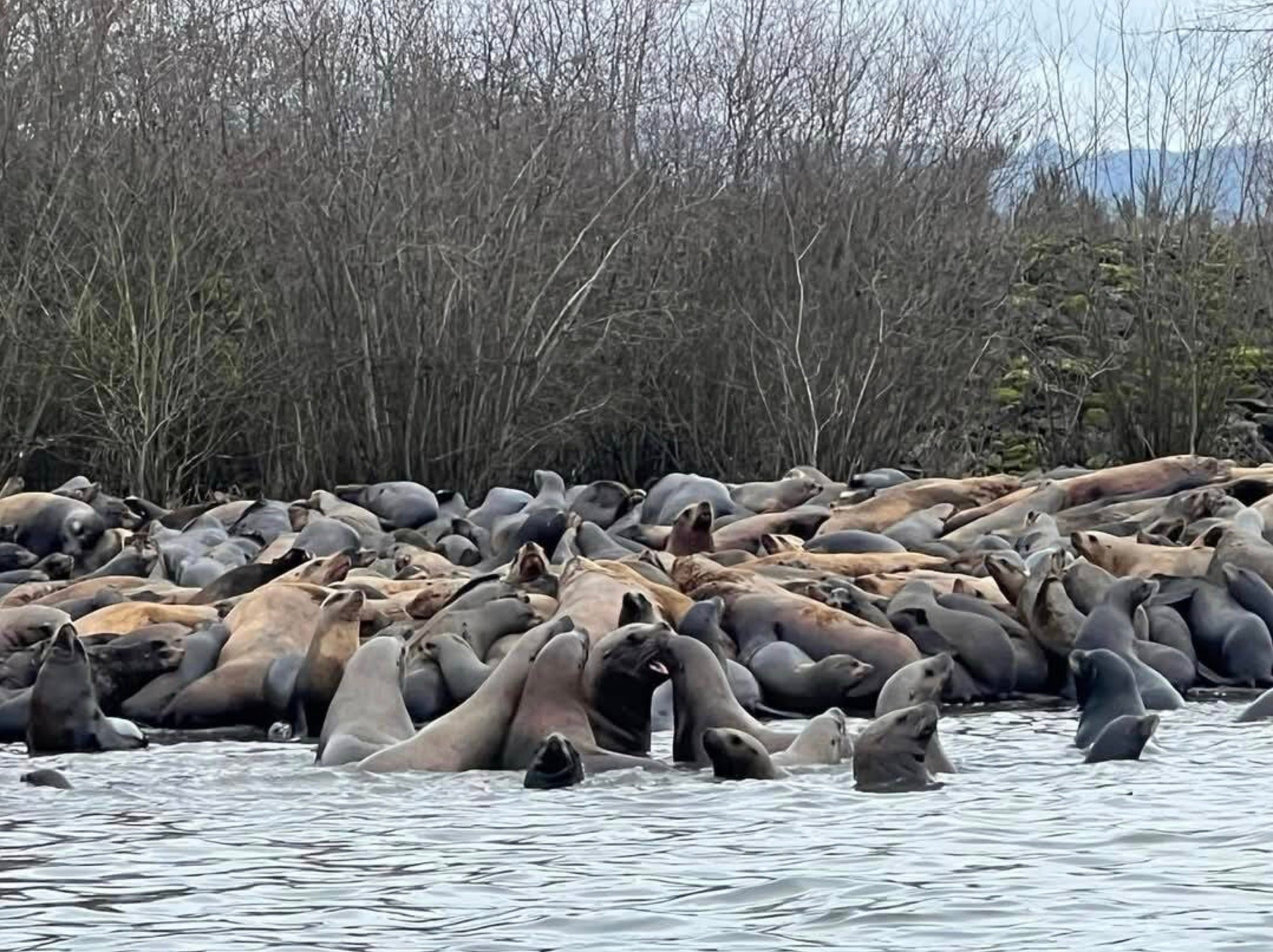
The first question that I posed to Representative Gluesenkamp Perez was how much her constituents bring up this topic. She said it is one of the things she gets the most letters about, but more than that it is a thing people talk to you about at the hardware store. She lives on the Columbia River and this is a very visible issue, with the sea lions being a nuisance in more ways than one. The animals take over docks and harbors and can be aggressive, and she has even seen a video of sea lions sinking an oyster boat docked in the harbor. It is notable that in the spring when there was a national news story about a tourist throwing a rock at a protected harbor seal in Hawaii, it turned out to be a man from Washington. What got less notice is that when defending himself in court his story was that he was just trying to scare the seal away because he has dealt with sea lions as a fisherman in the Puget Sound and knows how aggressive they can be.

At the beginning of this year, Katherine J. Wu published an article in The Atlantic about the increasing need to lethally remove sea lions, and she interviewed a biologist at Western Washington University who said that he believes climate change is the real culprit in salmon decline, but he fears sea lions will be made a scapegoat, “simply because sea-lion-on-salmon predation events—loud, violent affairs in which the mammal beats the fish on the surface of the water, then noisily gnaws its flesh—are more visible than the effects of climate change.” There are currently thousands of sea lions in the Columbia River, and it is no wonder the public should be tired of witnessing that while constantly being told humans are wholly at fault for salmon decline. It also is not just a “visibility” issue: The Oregon Department of Fish and Wildlife estimated in 2023 that sea lions eat up to 44% of the Columbia River spring Chinook run and 25% of the Willamette winter steelhead run each year. Even if more should optimally be attempting the upriver run, sea lions eating that many fish who have survived the perils of the ocean and are trying to get to their spawning grounds to breed has a substantial impact on populations.
Upon entering Congress, Gluensenkamp Perez was aware of this issue but did not realize the absurdity of how the government has been handling it. She had assumed that money could simply be earmarked to remove more sea lions. As it turns out, the government spends $38,000 per removal. One of my main questions was how this is possible given that you could kill a sea lion with a 30-06 rifle in about two seconds. The process, which she described as “Byzantine,” involves tracking the sea lions to determine which ones are the biggest problem, tranquilizing them, getting a whole team to move the heavy creatures, and then taking them to facilities where they are studied in various ways before and after being euthanized with such a massive overdose of ketamine that they must be disposed of at a biohazard facility; a team of 8 people can deal with 2-5 sea lions in one long work day in this fashion. The Congresswoman, who, if The New York Post is to be believed, has a colorful personal history, said “Dying from a ketamine overdose may be a human’s preferred method of dying, but that doesn’t mean that it’s good for sea lions.”
This got her to thinking about the work of the celebrated scientist Temple Grandin on the stress cows experience during different types of slaughter, and she came to the obvious conclusion that being shot must put the sea lions through less stress than the current system, something she commissioned a study on (she did not specify if it had been completed.) Further, doing things this way it is estimated to cost $203 per salmon saved, which Nathan Pamplin of the Washington Department of Fish and Wildlife told The Atlantic is not more pricey than other methods of saving salmon. It should be added that a Washington fishing license costs $39.95 in-state and a newly introduced salmon and steelhead endorsement is $8.75. Though the regulations are complex and ever-changing, if a man goes out regularly he is allowed to catch a good amount of salmon for this price (though it is challenging to do so with such poor runs.) Despite that much of the salmon spending is federal, how much less licenses cost than what government conservation efforts spend per fish saved is stunning, given that it is typically argued that fishing licenses are funding conservation. As Gluesenkamp Perez points out, salmon used to be a staple food for the poor in the region and the public, both Native and non-Native, deserves the food sovereignty of catching salmon as a reasonable option for obtaining meat.
Regardless of how it is done, the lethal removal of sea lions is controversial, but non-lethal methods have proven entirely ineffective. The list of things that have been tried would be a better fit for a satirical novel than serious efforts to conserve a keystone species. Much of what has been done is called hazing- yes, that is the proper term- which means harassing the animals as if they are college Freshman and seeing if will they go away. Methods have included such things as shooting them with rubber bullets, making various loud sounds, or putting inflatable men next to the river that they may cuddle up to instead of fleeing. In another instance, the Port of Astoria in Oregon created some sort of fake orca, complete with sounds, but it capsized instantly. Removed sea lions have immediately started the journey back from as far as California. Gluesenkamp Perez told me they once carried a sea lion out to the ocean by helicopter and the sea lion made it back into the the Columbia River before the helicopter pilot. Some have suggested netting the entire river mouth, but this brings up the obvious problem that the river is a major maritime route, particularly to export grain from my own Palouse region.
The problem with non-lethal removal is that sea lions are smart animals- it is California sea lions which are trained to perform by humans- and they know how to get back to places if removed. Washington is not in their breeding range so these are already animals making the journey up from California annually. Gluesenkamp Perez cited one instance where a Willamette Falls salmon run was critically endangered so the sea lions at the falls were killed so they couldn’t “recruit their cousins to come back,” as she puts it, and it was free of sea lions for years afterwards. It is believed that if they see their brethren going in a direction and never hear from them again, they know to not follow that path. The way she describes their invasion of the river is almost reminiscent of Stephen Miller describing illegal immigrants, but scientists who study sea lions also believe that they engage in the social behavior of remembering safe locations and leading each other to food, and salmon stalled before going up a dam’s fish ladder provide the ultimate buffet.
Northwest tribes who have relied on the salmon for millennia are supportive of legislation to allow them to choose the appropriate methods of removing sea lions. In July of this year, Ed Johnstone, Chairman of the Northwest Indian Fisheries Commission, wrote an editorial in favor of an act by Emily Randall, a Democrat from the Olympic Peninsula, and Michael Baumgartner, my own Republican Congressman in Eastern Washington, which goes further than Gluesenkamp Perez’s Columbia River legislation and would expand lethal sea lion and seal removal all over the state. Johnstone argues that salmon are a “treaty protected resource” and that the federal government is thus obligated to allow the natives to deal with this threat to salmon. It is also the case that, ironically, the resident orcas in the Puget Sound exclusively eat salmon and are threatened by malnutrition- their struggles are in the news constantly- despite that any other orca population would eat sea lions. Salmon are far from the only animal suffering from the sea lion population being out of balance.
The biggest obstacle to amending the Marine Mammal Protection Act to allow for the reasonable system of lethal removal of sea lions- which have grown in population enough it would be fine to issue normal hunting licenses- is public sentiment against killing these creatures. Gluesenkamp Perez told me, “Policy is often driven by optics and the current policy is designed to make people feel good.” In this view, she is in agreement with Canada’s Seal and Sealing Network, who run the website Proudly Indigenous Crafts and Designs, which promotes the sale of seal products. The Canadian seal harvest is recognized as sustainable and has the endorsement of major international organizations such as the World Wildlife Fund. The organization’s FAQ calls laws against importing seal products, “unjust and unfounded international scorn,” and explains the ways their people have been harmed. But the optics of not allowing seal imports look great to people who aren’t connected to the ocean. The website also says that each seal provides at least $200 of nutritious meat, though it is unclear what year or in what currency that comparison was made. That seals and sea lions are valuable animals adds to the absurdity that the government is spending $38,000 each to kill sea lions when each sea lion killed should be a source of revenue. Gluesenkamp Perez said her understanding is that with sea lion harvest having been illegal since 1972 the “living practice” of making crafts from sea lions is largely gone among the Western Washington tribes, but that they have looked into re-learning them from other indigenous peoples who have maintained the practice.
A last, but important, objection to reducing sea lion populations is the idea that you can’t “blame nature” for salmon decline. There are several things wrong with this. For one, the dam system has massively changed the river, making it deeper and slower moving and concentrating the salmon in certain places so this is not the natural state of the river so harms of changing nature should be mitigated. Similarly, there is a bounty on the native fish called northern pikeminnow (the erstwhile squawfish) because dams favor them at the expense of the salmon. However, Gluesenkamp Perez denied the impact of the dam in encouraging sea lion colonization- which I suspect is because she quite sensibly didn’t want to be seen saying anything bad about the dam system during a competitive re-election- but I find it impossible to believe this doesn’t make it easier for the sea lions, who, unlike salmon, are not made to swim against strong river currents. The point she makes is that the natives always previously hunted sea lions who made their way up the river, presumably less to protect the then-abundant salmon and more to make use of the valuable animals. A fact in support of this argument is that according to the book Land Use, Environment, and Social Change: The Making of Island County, Washington a classic environmental history by Richard White, in Western Washington there are human artifacts on the glacial tilth. The ramifications of this are that humans were already living here before the old growth forests began to grow and before the Columbia River was carved out by Lake Missoula floods. This means that there has never been some sort of pre-human “primeval” environment since the area reached something resembling its current geological form, and the only time in the last perhaps 13,000 years where humans have not hunted sea lions and seals in the Columbia River and Puget Sound is since the Marine Mammals Protection Act was passed in 1972 (not to mention, California natives hunted them in their southern breeding grounds.) That humans have always been part of the environment is not at all an argument to do whatever we want, but instead is an argument to be responsible stewards, which at this time requires reducing the population of seals and sea lions.
While Gluesenkamp Perez has faced ridicule, and dealt with people who have such a poor understanding of her argument that they think she wants to go to Florida to shoot manatees, the facts overwhelming;y back up her claim that sea lions are causing damage by being places they shouldn’t be, and that if they are not overpopulated as a whole, they are rapidly getting there and plans should be made to control their population. It is the peak of government stupidity to waste vast resources sending a small number of sea lions to ketamine torture chambers instead of just hunting them like any other animal that needs its population controlled. Despite her frustration, the Congresswoman emphasized, “This is not motivated by hatred of sea lions, I have no beef with sea lions. They’re cool, but they are sea lions, they don’t belong in the river.” It is this kind of common sense that has helped her win two elections as a Democrat in a district that voted for Trump three times.
Thank you for reading! The Wayward Rabbler is written by Brad Pearce. If you enjoyed this content please subscribe and share. I am available for freelance work and can be contacted by email at pearcebrad@hotmail.com. You can see my shitposting and serious commentary on Twitter @WaywardRabbler.
Awesome stuff, in that it is a chronicle of the bizarre. Which is really the story of PNW salmon conservation. You can't make this stuff up.
$38K to remove one sea lion?
The government can't do anything right.